

An Affidavit Involves More Than a Signature
The small certificate beneath your statement can change what happens at the appointment. Read it before reaching for the pen.
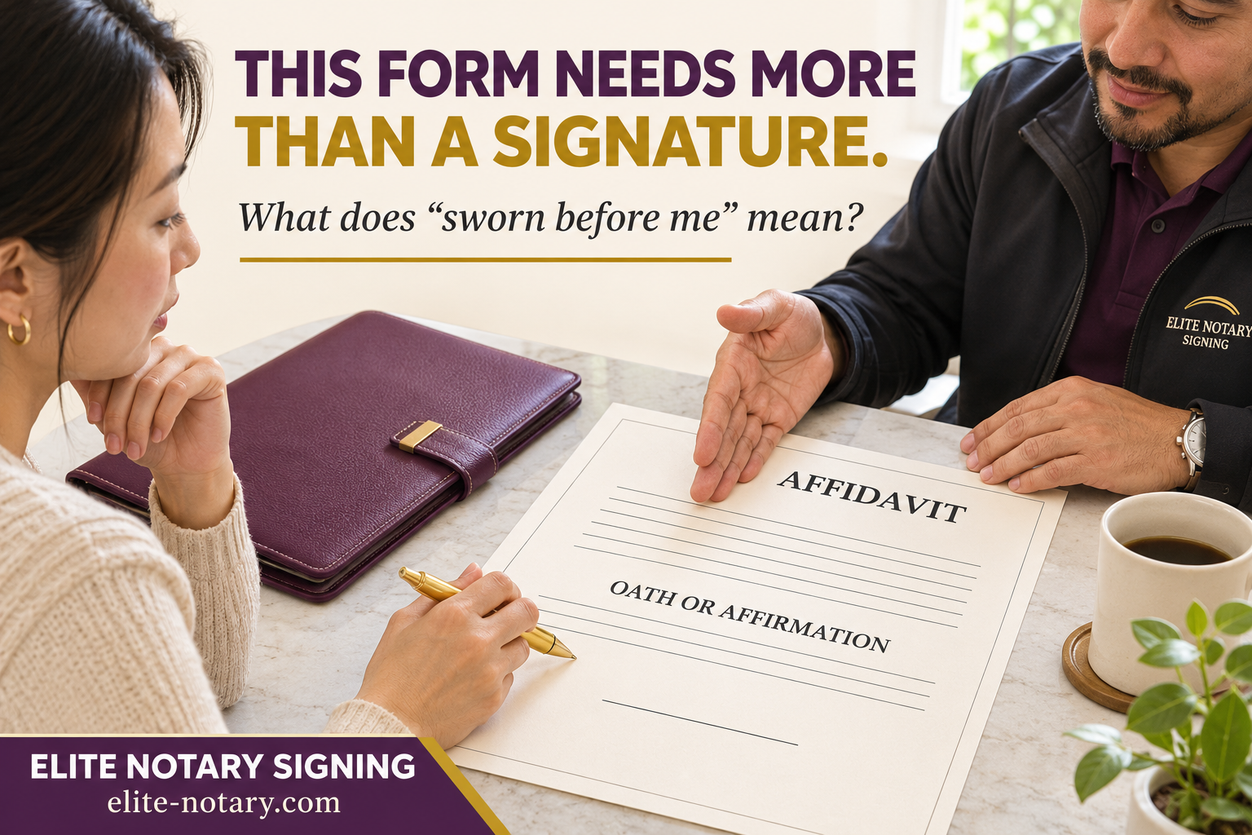
The form is printed. Your explanation is typed. You turn to the last page and find a few words beneath the signature line: sworn before me. You thought the appointment was simply a place to sign.
That small block of wording matters. Elite Notary Signing supports eligible affidavit notarization appointments in Duluth and Metro Atlanta, including the required oath or affirmation when the requested notarial act calls for it. Share the complete form and its instructions before the visit so the appointment fits the task.
What Does “Sworn Before Me” Mean?
It signals that the certificate involves a sworn or affirmed statement. In a jurat, the signer makes an oath or affirmation and signs in the notary’s presence. The GSCCCA jurat example shows both parts together.
The statement remains yours. A notary does not investigate every fact or certify that your account is true. Do not treat the seal as a substitute for reviewing what you are declaring.
Read the Certificate Before You Sign
Look at the wording supplied with the form and keep every page together. If the form is missing its notarial wording or the instructions conflict, ask the document provider to clarify the requested procedure.
An acknowledgment and a jurat serve different functions. The GSCCCA acknowledgment example records an acknowledgment rather than the sworn statement shown in its jurat example. ENS can explain notarial procedures, but does not choose the legal effect your document needs.
Prepare Your Statement Before the Visit
Read your completed statement while you have time to check it. Resolve names, dates, missing facts, or language you do not understand with the source that supplied the form or with qualified counsel. Do not ask the notary to write the account for you.
For example, a school or other organization may request a statement about a particular event. Your job is to understand what you are stating; its staff must explain what information it needs. A notary appointment does not settle a disagreement about the underlying facts.
What Happens During the Appointment?
For a jurat appointment, expect identity confirmation, an oath or affirmation, and signing in the notary’s presence. Leave that signature for the appointment. If you already signed, tell ENS when arranging service so the procedure can be reviewed.
An affirmation provides a nonreligious way to make the solemn declaration. Ask about the procedure if it is unfamiliar. This is an active part of the appointment, rather than a checkbox someone completes while you wait.
The Person Making the Statement Must Participate
If you are arranging the visit for a parent, coworker, or relative, confirm who is actually making the statement. Help with transportation, printing, and scheduling without assuming you can answer the oath for someone else.
Keep a little space in the schedule for the signer to read and ask questions. If they cannot understand the statement, disagree with it, or are not ready to proceed, pause and resolve the concern with the appropriate person.
How Elite Notary Signing Can Help
Begin your request with the form’s name, the provider’s instructions, signer count, appointment city, and deadline. Tell ENS that the certificate mentions an oath, affirmation, or jurat. Do not email sensitive supporting records just to ask about availability.
ENS reviews the requested notarial service and appointment arrangements, confirms what is needed for the visit, and performs the eligible notarial act when the requirements are met. Afterward, follow the recipient’s delivery instructions.
The certificate is small. The declaration is personal.
Make time to understand what you are affirming before the appointment.
Elite Notary Signing
Need an affidavit notarization appointment?
Share the form name, notarial instructions, location, signer count, and deadline so ENS can review your request.
Add comment
Comments