

Clear Roles Make the Signing Easier to Manage
The document is ready and the appointment is on the calendar. Make sure everyone understands the role they are there to perform.
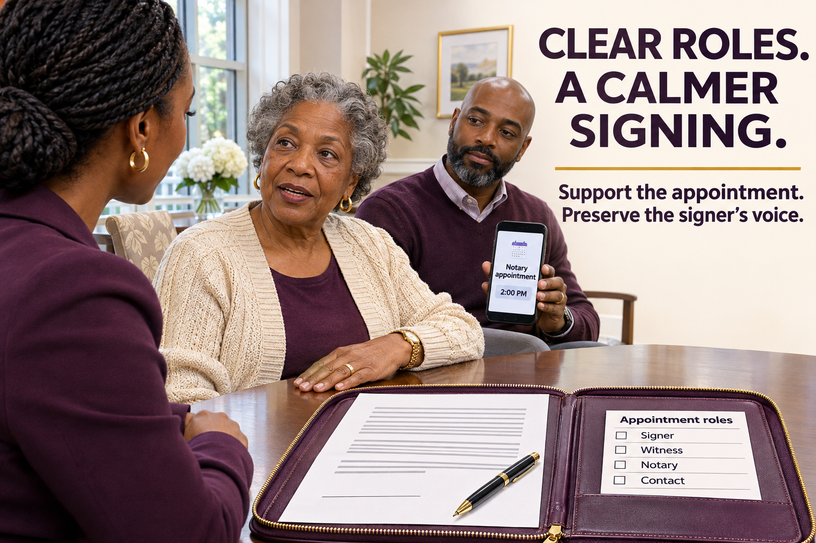
The appointment is on the phone calendar. The document is in a folder. One relative arranged the visit, another offered to witness, and the signer is waiting for everyone to sit down.
Then the questions start. Who is signing? Is the relative an eligible witness? Should the person who booked the visit answer for the signer?
Elite Notary Signing supports eligible mobile notarial appointments in Duluth, Gwinnett County, and Metro Atlanta. Confirming the participants and appointment needs in advance helps ENS keep the signing focused on the person and notarial act involved.
Who Does What at the Appointment?
The signer, document provider, witnesses, notary, appointment contact, and receiving organization have different responsibilities. Confirm those roles from the provider’s instructions before the visit. Scheduling for someone does not give the contact authority to decide or sign for them.
When Helpful Roles Begin to Overlap
Imagine an adult son arranging a mobile appointment for his mother. He handles parking and timing, brings the document, and plans to explain the appointment when the notary arrives. Those are useful preparations.
But if his mother is the signer, the conversation must still include her directly. His familiarity with the paperwork does not make his answers a substitute for hers. This illustrative situation shows how logistical help and signer participation can remain distinct.
The same distinction matters in a hospital room, care facility, or office. A staff member may arrange access without being a witness. A caregiver may bring the folder without having authority to sign the document.
Confirm These Six Roles
The person whose signature or statement is involved participates in the notarial procedure. Georgia guidance requires the notary to establish the signer’s, oath taker’s, or affirmant’s identity through personal knowledge or satisfactory evidence.
The attorney, agency, employer, school, institution, or other source supplies the document or instructions. Ask this source who must sign and what execution requirements apply. Take legal interpretation to qualified counsel.
A required witness performs the role specified by the document and applicable instructions. Do not assume an available relative qualifies or that the notary will also act as a separate witness. Confirm requirements and arrangements in advance.
The notary performs the authorized notarial act and completes the certificate when requirements are met. The notary does not select the legal document, grant authority, or decide what a signer should agree to.
The contact handles location, timing, parking, facility access, and communication. This person may also be the signer. Scheduling responsibilities alone do not create authority to act for another person.
The recipient explains its submission requirements, such as delivery method or required supporting records. Confirm those instructions separately from booking the appointment.
A helpful contact can arrange the visit.
The signer still needs their own voice.
Put the Role Beside the Name
Before everyone gathers, ask: “Who is coming, what are they there to do, and who confirmed that requirement?” A short role list makes unanswered questions visible without putting one helper in charge of someone else’s decisions.
Record the signer, document provider, witnesses, appointment contact, notary, and recipient. Beside each, note the confirmed responsibility or the question still waiting for an answer. One person may handle several logistical tasks, but legal eligibility still controls any signing or witness role.
The Notary Appointment Role Check is an organizer for this conversation. It does not appoint an agent, establish witness eligibility, or create permission to sign for someone else. Leave unresolved items marked “confirm.”
How ENS Keeps the Appointment Focused
Before an eligible visit, ENS can discuss signer count, the identification plan, confirmed witness needs, location, access, and timing. During the procedure, direct signer participation remains separate from the help others provide.
Mobile appointments may be available at homes, offices, hospitals, care facilities, and other agreed locations, subject to readiness and availability. Facility staff and family members can help coordinate a suitable setting while the notary addresses the signer directly.
Georgia’s official notary guidance describes authorized acts and identity requirements. Questions about legal authority or document meaning belong with qualified counsel. A notary appointment cannot resolve a family disagreement about who should act.
Before a Georgia notary appointment, identify the signer, provider, witnesses, notary, appointment contact, and recipient. Confirm what each person is responsible for so practical help supports the signing without replacing the signer’s participation.
Look at the appointment on the calendar, then put a clear role beside each person expected to attend.
Have a completed document that needs notarization?
Share the document name, provider’s instructions, signer count, location, and preferred timing so ENS can discuss the requested service.
Add comment
Comments