

Apostille Education
General education on what apostille means, when it may apply, and why notarization alone may not be enough for international use.
Ask about apostille educationElite Notary Signing | Community Education
Understand what your documents may need before they cross borders.
Explore apostille, authentication, notarization, and translation questions, or request an educational session for your community or organization.
Led by Chermaine Smith, MA, Georgia Notary Public & Apostille Facilitator. Meet Chermaine
Based in Duluth, serving Gwinnett County, Metro Atlanta, and people navigating international document questions.
Choose your next step
Ask a question, explore document preparation, or connect your group with international document education.
General education on what apostille means, when it may apply, and why notarization alone may not be enough for international use.
Ask about apostille educationGuidance on the questions to check before a document is submitted, including document type, issuing authority, destination country, deadline, and notarization status.
Ask a document questionCommunity leaders may request an educational session about apostille awareness, Hague and non-Hague countries, document readiness, translation considerations, and responsible next steps.
Request a community sessionUnderstand the process
International document education helps you connect the document, responsible authority, destination, and receiving office’s instructions before paperwork is signed, translated, mailed, or submitted.
Each step answers a different question. Notarization records a notarial act; an apostille or authentication addresses the official signature or seal connected to a document. One does not automatically replace another.
A useful next step: Ask what the receiving office actually requires before arranging another signature or notarization.
A document’s issuing or notarizing jurisdiction helps identify the responsible authority. A Georgia record, a federal record, and a foreign-issued document may begin with different offices.
A useful next step: A Georgia birth certificate and an FBI background check can need different routes even when they are for the same overseas application.
The destination country helps identify the certification process. The receiving office’s instructions also matter for document type, format, age, language, and submission method.
A useful next step: Keep the written request from the school, employer, government office, embassy, court, or organization receiving your document.
Translation and certification are separate considerations. A receiving office may require a translation of the document, its apostille, or supporting material. A photocopy may not replace a required certified record.
A useful next step: Confirm language and certification requirements before ordering translation or replacing records.
People & communities
This resource supports individuals managing international paperwork and community leaders who want a practical place to refer document questions.
Expats, families, immigrants, and dual-citizenship applicants who need help understanding whether U.S. records may require apostille, authentication, translation, or consular review.
Churches, 55+ communities, apartment communities, HOAs, cultural organizations, and neighborhood groups that want to connect people with trusted international document education.
International students, graduates, professionals, employers, business owners, school offices, legal teams, and organizations that need a clear educational resource before documents are sent overseas.
Document questions
These examples can prompt useful questions. The document’s origin, format, destination, and receiving instructions determine the appropriate next step.
Education does not establish eligibility or replace instructions from the responsible authority. A document issued outside Georgia or outside the United States needs review of its issuing jurisdiction.
From question to next step
An education inquiry helps identify the relevant question before any service or community-session arrangements are confirmed.
Use the form on this page to explain what document education or international-use support is needed.
Elite Notary Signing reviews whether the request appears related to apostille, authentication, notarization, translation, legalization, or community education.
Next-step guidance is provided based on the document type, destination country, timing, and purpose of the request.
If document support or a community education session is appropriate, Elite Notary Signing coordinates the next available option.
Translation may be part of an international request. ENS can coordinate with third-party providers when available. Confirm whether the receiving office requires a certified translation and whether the document, apostille, or other certificates must be translated.
Ask ENS about language availability, service details, and pricing before ordering.
Ask about translationExplore the differences between certification steps and where to confirm requirements.
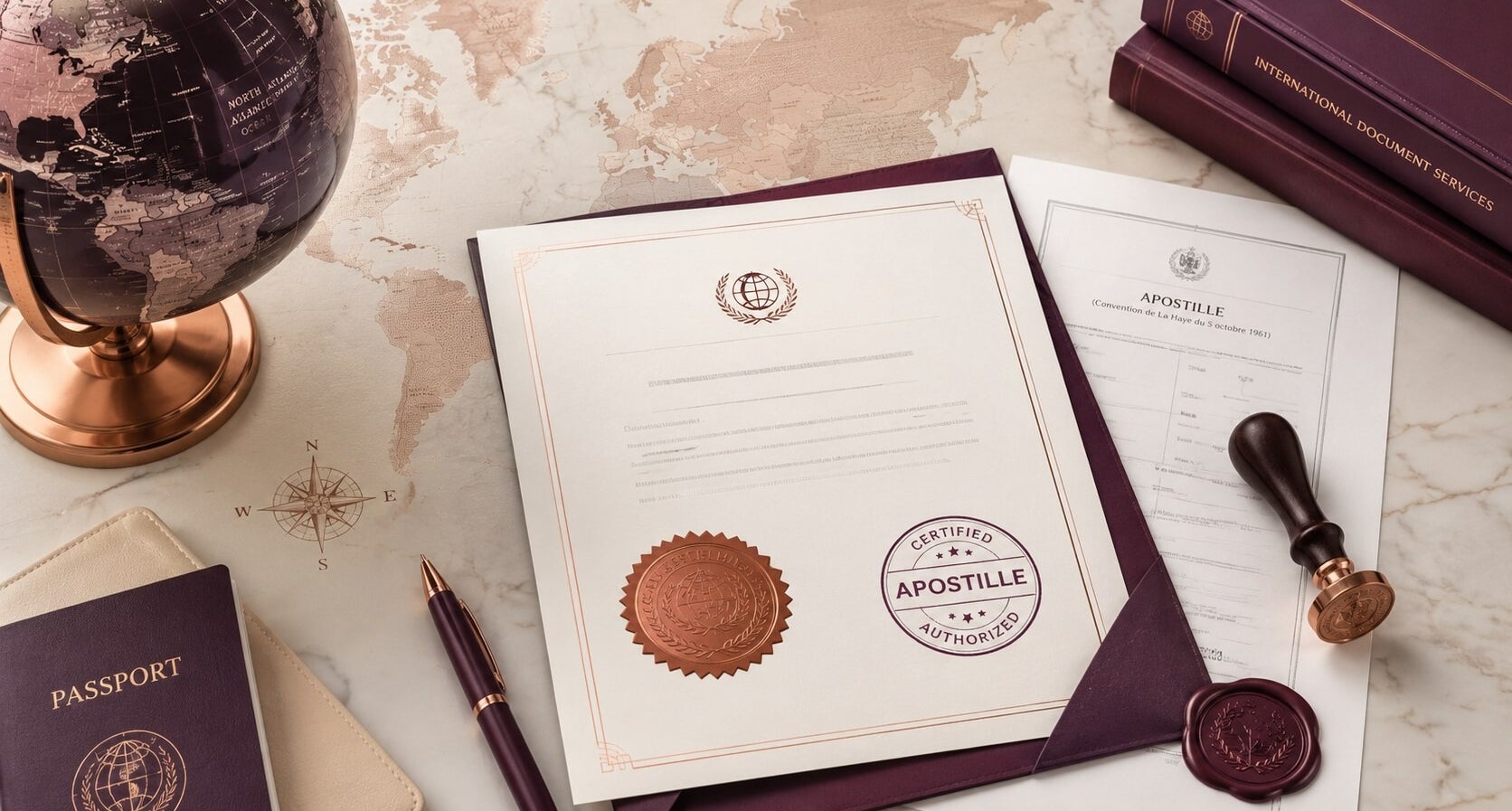
An apostille is a certificate used for certain public documents that need to be accepted in another country that participates in the Hague Apostille Convention. It confirms the authority connected to the signature, seal, certification, or notarial act on the document.
Authentication is a form of document certification used in some international document processes. Eligible federal documents may need a federal apostille or authentication certificate, depending on the destination. Authentication may be followed by embassy or consular legalization when required.
Legalization is usually an additional embassy or consulate review process used for documents going to countries that do not accept Hague apostilles. The required sequence varies by document and destination.
The destination country is an important starting point, but the document type and issuing authority also matter. Hague Convention countries generally use apostilles, while non-Hague destinations may require authentication and embassy or consulate legalization.
No. Notarization is a separate step. Some documents need notarization before they can move forward, but notarization alone does not make a document ready for international use.
Vital records such as birth certificates, marriage certificates, and death certificates are generally issued or certified by the proper government office rather than notarized by a notary. International use may require apostille, authentication, legalization, or another step depending on the destination.
GSCCCA issues apostilles for eligible Georgia-origin documents. Georgia Great Seal authentication for non-Hague destinations is handled by the Georgia Secretary of State. Federal documents, including FBI background checks, follow the appropriate federal route. Confirm the responsible authority before submitting.
Translation services may be available for international document requests. Requirements vary by document type, destination country, receiving authority, language, and intended use. Contact Elite Notary Signing for current service details, availability, and pricing.
No. Elite Notary Signing does not prepare legal documents, provide legal advice, select documents for clients, or determine whether a document is legally valid. Elite Notary Signing provides notary support, apostille facilitation, authentication and legalization education, document readiness guidance, and related international document support.
Use these resources alongside the instructions from the office receiving your documents.
Check whether the destination country participates in the Hague Apostille Convention.
View the official HCCH country listGeorgia apostille and authentication information is available through GSCCCA.
View Georgia apostille informationFederal documents may require federal authentication through the U.S. Department of State.
View federal authentication guidanceFor eligible Georgia documents intended for non-Hague destinations, review the Georgia Secretary of State’s authentication requirements.
View Georgia Great Seal guidanceBrowse articles by service, including international documents, notarization, and family paperwork.
Explore Apostille & International ArticlesExplore explanations about apostilles, authentication, document preparation, and common questions before sending documents abroad.
Visit the ENS YouTube ChannelChoose the type of support you need. The form will show the details relevant to your request.
Use this form for an education question, document-readiness inquiry, or community-session request. No payment is required to send an inquiry. If you need apostille or authentication processing, review ENS service options.
Share the document or audience, what you are trying to accomplish, and any relevant timing. Most requests receive a response within one business day.
Elite Notary Signing provides general document education, notary support when appropriate, and apostille, authentication, legalization, and translation coordination within the services offered. ENS does not prepare legal documents, provide legal advice, select legal forms, determine legal validity, or guarantee acceptance. Community-session arrangements are confirmed after review.
Bring the conversation to your community
Churches, cultural organizations, community groups, schools, and professional networks can request an educational session about international document preparation and responsible next steps.