

The boxes were labeled. The bags were ready. The schedule had been confirmed. But the documents everyone assumed were coming had never left the drawer.
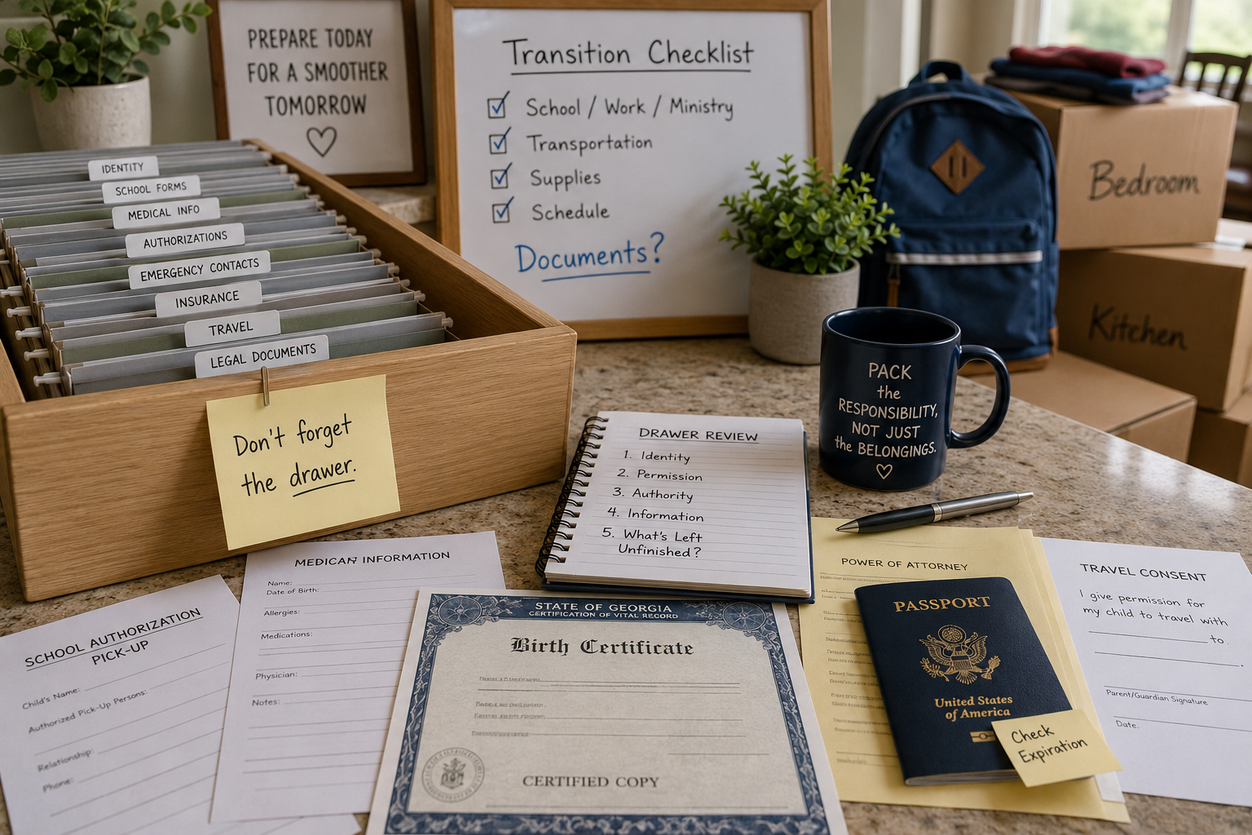
The family had prepared for the transition.
Clothes had been folded. School supplies had been purchased. Medication had been organized. Transportation had been confirmed. Phone numbers had been exchanged, and everyone understood where they were supposed to be.
By the door sat the bags that would move with the family. In the hallway were boxes marked with the names of the rooms where they belonged. On the kitchen counter was a handwritten list of final tasks.
Everything appeared ready.
Then someone asked for the documents.
The school authorization form was still in the desk. The medical information was in a kitchen drawer. The current identification was somewhere in a purse that had already been packed. The caregiver instructions had never been printed. The signed letter everyone thought another family member had was still sitting in an email inbox.
The family had packed the belongings.
Nobody had packed the drawer.
That small oversight changed the entire pace of the transition. The family had not forgotten the child, the caregiver, the school, the job, or the ministry responsibility. They had simply treated the paperwork as something separate from the move itself.
But identity, permission, authority, and emergency information do not remain behind when responsibility changes hands. They have to move with it.
The Drawer Is Where Important Things Wait
Most families have some version of the drawer. It may be in a desk, kitchen, bedroom, filing cabinet, closet, or home office. Inside are the papers that were too important to throw away but not urgent enough to organize immediately.
There may be birth certificate copies, expired identification, school forms, medical authorization documents, travel consent letters, custody records, insurance information, emergency contacts, employee forms, affidavits, powers of attorney, or documents that still need signatures.
The drawer usually does not represent carelessness. It represents good intentions.
Someone planned to review the documents later. Someone intended to ask what needed to be signed. Someone believed the form had already been completed. Someone assumed another family member knew where everything was.
Then the schedule restarted before anyone opened the drawer.
That is when the family learns that physical packing and responsibility packing are not the same.
Start With the Person, Not the Paper
The most effective review does not begin by emptying every drawer and reading every document in the house. It begins with the person whose routine, location, care, work, or responsibility is changing.
That may be a child starting school, a student leaving for college, a family member entering rehabilitation, an employee beginning a new position, a caregiver assuming new duties, a volunteer returning to a ministry program, or a relative managing family responsibilities during an extended absence.
Once the person is identified, the review becomes more focused.
What confirms who the person is, and is that record current and acceptable?
What allows another person to pick up, travel with, supervise, or assist?
What defines the responsibility being transferred?
What emergency, medical, contact, or logistical information must travel with the person?
What remains missing, expired, unsigned, damaged, or unclear?
Identity confirms who is involved
The first part of the review is identity. That may include a driver’s license, state identification card, passport, birth certificate, school identification card, employee record, name-change document, or certified copy requested by an institution.
The important question is not simply whether the record exists. The family should ask whether the name is correct, whether the identification is current, whether the copy is readable, and whether it is the version the receiving organization requires.
Permission makes the plan visible
Many families have already discussed who will pick up the child, help the parent, coordinate transportation, manage the appointment, or respond during an emergency.
Everyone may understand the arrangement. The school, facility, airline, medical provider, ministry, employer, or program may still require that arrangement to be documented.
Not every permission form requires notarization. Some only need to be completed and delivered. Others may require witnesses or a notarial act. The requirement should be confirmed before the document is signed.
Authority defines the responsibility
A person may be familiar to the family and deeply trusted, yet still lack the authority an organization requires.
Familiarity explains the relationship. Authority explains what the person is allowed to do.
Do we have the document?
Will the document actually work for the purpose in front of us?
The Information Must Move With the Responsibility
Some records do not grant permission or legal authority. They provide the information another responsible person may need.
This may include emergency contacts, medical conditions, allergies, physician information, insurance details, custody restrictions, transportation instructions, school contacts, employer contacts, program leader information, or the location of supporting documents.
That information should not remain in one person’s memory. When responsibility moves, the essential information should move with it.
This is where school, work, ministry, and caregiving transitions begin to look more alike than different.
A school restart may require enrollment records, proof of residency, emergency contacts, medical information, pickup authorization, custody documents, transportation instructions, or records from another district.
A work transition may require identification, employment eligibility documents, professional certificates, transcripts, name-change records, affidavits, business authorizations, or background information.
A ministry or community program may need volunteer forms, parent permission, emergency contacts, transportation authorization, activity waivers, background-check documentation, and clear leadership assignments.
A caregiving transition may require medical information, facility instructions, emergency contacts, caregiver authorization, transportation details, or documents that identify what the caregiver is permitted to do.
The setting changes. The need for a clear handoff does not.
International Use Adds Another Layer
A birth certificate, diploma, transcript, background check, travel consent letter, power of attorney, medical authorization, or business record may require more than notarization before another country will accept it.
The family should confirm the destination country, the issuing authority, the document type, whether an original or certified copy is required, and whether apostille, authentication, translation, or consular processing may also be needed.
A notarized document is not automatically ready for international use. The destination and issuing authority help determine the responsible next step.
Families who need support after confirming the recipient’s requirements can review ENS Apostille Atlanta.
The Document May Be Present and Still Be Unprepared
The identification may have expired. The form may contain an old address. The emergency contact may no longer be available. The pickup list may not include the current caregiver. A page may be missing. The signature line may still be blank.
The recipient may require an original when the family has only a copy. The form may already have been signed before anyone confirmed whether notarization was required. The person expected to use the document may not know where it is.
That is why a document review must consider both presence and readiness.
Move the Documents With the Handoff
The most useful checklist is not one that names every possible family record. It is one that identifies the few missing items that could stop the handoff.
- Who is moving into the new routine?
- Where are they going?
- When does the transition begin?
- Who will assume responsibility?
- What identification is required?
- What permission or authority is required?
- What emergency information is needed?
- Who must receive the records?
- Where are the originals?
- What still needs to be signed?
- Are witnesses or notarization required?
- What deadline applies?
When the Drawer Leads to a Service Need
Mobile Notary Support
For completed documents requiring an eligible notarial act at a home, workplace, hospital, care facility, or community location.
Review General Notary ServicesEstate Planning Notary Support
For prepared powers of attorney, advance directives, and other estate-related documents requiring coordinated signing support.
Review Estate Planning SupportApostille Support
For eligible documents intended for use outside the United States after destination and recipient requirements have been confirmed.
Review Apostille SupportThe Drawer Was Never Really About the Drawer
The family believed the transition had been packed because the visible items were ready.
The bags were closed. The boxes were labeled. The schedule had been confirmed.
But the records that carried identity, permission, authority, and emergency information had been left behind.
The drawer represented the part of the plan everyone assumed someone else had handled.
A smoother handoff begins when the family stops asking only what belongings need to move and starts asking what information must move with the responsibility.
Elite Notary Signing, serving Gwinnett, DeKalb, Fulton and Forsyth Counties, Georgia
Pack the responsibility, not just the belongings.
Do not let the document everyone assumed was packed become the reason the transition cannot move forward.
Call or Text: 464-333-1638
Serving Gwinnett, DeKalb, Fulton, Forsyth, and surrounding Metro Atlanta communities.
Add comment
Comments