

Expats & Families
Expats, families, immigrants, and dual-citizenship applicants who need help understanding whether U.S. records may require apostille, authentication, translation, or consular review.
Helping expats, international students, families, professionals, businesses, and community organizations understand the likely path for documents intended for use outside the United States, including apostille, authentication, legalization, notarization, translation, and document readiness.
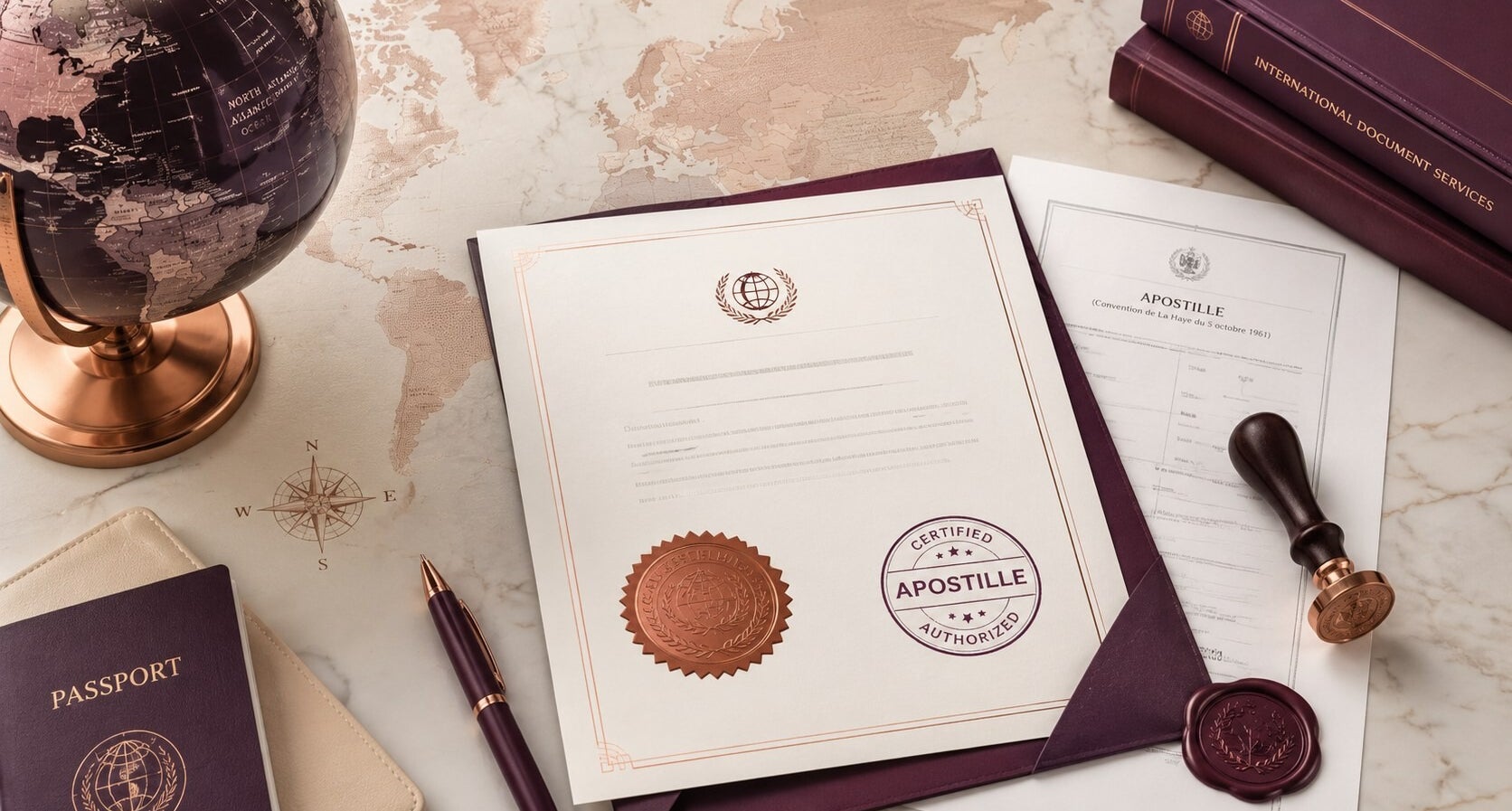
An international document education resource from Elite Notary Signing for people preparing personal, academic, legal, family, and business records for use outside the United States.
A document can be valid, signed, notarized, or certified and still need another step before it is accepted outside the United States.
Depending on the destination country, the document may need an apostille, authentication, embassy legalization, translation, or additional review. This page was created to help people understand the international document pathway before paperwork is mailed, submitted, translated, or sent overseas.
Explore videos covering apostille, authentication, international document preparation, common document mistakes, and other practical topics for documents being used abroad.
International document education helps people understand what may be required before a U.S. document is accepted in another country. The correct path depends on the document type, issuing authority, destination country, and receiving authority.
Simple answer: It helps people understand when notarization may be part of the process, when an apostille may apply, when authentication or embassy legalization may be needed instead, and when translation should be considered.
This resource is designed for expats, international students, families, professionals, businesses, and community organizations trying to understand documents intended for international use.
Expats, families, immigrants, and dual-citizenship applicants who need help understanding whether U.S. records may require apostille, authentication, translation, or consular review.
Churches, 55+ communities, apartment communities, HOAs, cultural organizations, and neighborhood groups that want to connect people with trusted international document education.
International students, graduates, professionals, employers, business owners, school offices, legal teams, and organizations that need a clear educational resource before documents are sent overseas.
The document type, issuing authority, destination country, deadline, and receiving authority all help determine the likely next step.
The request form gives individuals and community leaders a clear way to ask for international document education or support.
General education on what apostille means, when it may apply, and why notarization alone may not be enough for international use.
Guidance on the questions to check before a document is submitted, including document type, issuing authority, destination country, deadline, and notarization status.
Community leaders may request an educational session about apostille awareness, Hague and non-Hague countries, document readiness, translation considerations, and responsible next steps.
The goal is clarity before documents move forward.
Use the form on this page to explain what document education or international-use support is needed.
Elite Notary Signing reviews whether the request appears related to apostille, authentication, notarization, translation, legalization, or community education.
Next-step guidance is provided based on the document type, destination country, timing, and purpose of the request.
If document support or a community education session is appropriate, Elite Notary Signing coordinates the next available option.
Some destination countries, embassies, consulates, schools, courts, employers, or agencies may require translated documents before they will accept them.
Translation services may be available for documents connected to apostille, authentication, or legalization requests. Requirements vary by document type, destination country, receiving authority, language, and intended use.
Clear answers for people and organizations trying to understand international document requirements.
An apostille is a certificate used for certain public documents that need to be accepted in another country that participates in the Hague Apostille Convention. It confirms the authority connected to the signature, seal, certification, or notarial act on the document.
Authentication is another form of document certification. It is commonly used when the destination country is not part of the Hague Apostille Convention or when a federal document must follow a federal authentication path. Authentication may be one step before embassy or consulate legalization.
Legalization is usually an additional embassy or consulate review process used for documents going to countries that do not accept Hague apostilles. The required sequence varies by document and destination.
The destination country is an important starting point, but the document type and issuing authority also matter. Hague Convention countries generally use apostilles, while non-Hague destinations may require authentication and embassy or consulate legalization.
No. Notarization is a separate step. Some documents need notarization before they can move forward, but notarization alone does not make a document ready for international use.
Vital records such as birth certificates, marriage certificates, and death certificates are generally issued or certified by the proper government office rather than notarized by a notary. International use may require apostille, authentication, legalization, or another step depending on the destination.
Eligible Georgia apostille and authentication requests are handled through the Georgia Superior Court Clerks' Cooperative Authority, commonly known as GSCCCA. Federal documents, including FBI background checks, generally follow a federal route instead.
Translation services may be available for international document requests. Requirements vary by document type, destination country, receiving authority, language, and intended use. Contact Elite Notary Signing for current service details, availability, and pricing.
No. Elite Notary Signing does not prepare legal documents, provide legal advice, select documents for clients, or determine whether a document is legally valid. Elite Notary Signing provides notary support, apostille facilitation, authentication and legalization education, document readiness guidance, and related international document support.
Use official resources to verify Hague Convention status, Georgia apostille information, and federal authentication guidance before documents are submitted.
Check whether the destination country participates in the Hague Apostille Convention.
View the official HCCH country listGeorgia apostille and authentication information is available through GSCCCA.
View Georgia apostille informationFederal documents may require federal authentication through the U.S. Department of State.
View federal authentication guidanceElite Notary Signing provides international document education, document readiness support, and referral-friendly guidance for expats, international students, families, professionals, businesses, and community organizations.
Whether you are preparing a document for another country, supporting a community group, or trying to understand whether apostille, authentication, notarization, translation, or legalization may apply, start here.
Start here. Elite Notary Signing will help identify the likely next step. Most requests receive a response within one business day.
Elite Notary Signing provides apostille facilitation support, document readiness education, notary support when appropriate, authentication and legalization education, and related international document support. Translation services may be available; contact Elite Notary Signing for current details, availability, and pricing. Elite Notary Signing does not prepare legal documents, provide legal advice, select documents, determine legal validity, or guarantee acceptance by any agency, institution, embassy, consulate, or foreign authority.
Whether you are preparing documents for another country or helping a community understand international document requirements, the next step is simple.