

Family Document Readiness
What Health Information Should Your Family Organize Before It Is Needed?
A current healthcare information sheet can help your family find essential details, verify where they came from, and locate completed documents when the next step cannot wait.
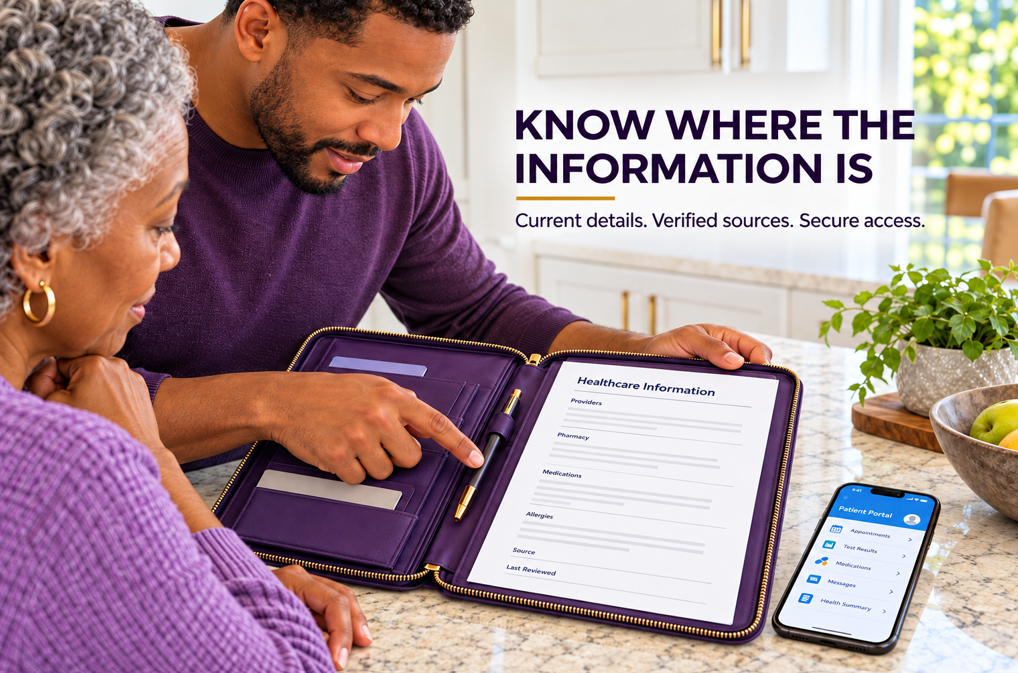
When the information exists but no one can find it
A healthcare question can arrive before a family has time to gather its thoughts. One person knows the pharmacy. Another remembers that a medication changed. Someone else knows where the insurance card is stored, but no one is certain which list is current.
Families contacting Elite Notary Signing about a completed healthcare or estate-planning document may be managing those same details while also confirming signatures, identification, witnesses, and facility access. ENS does not need a family's medical history and does not prepare healthcare or legal documents. Our role is to perform the authorized notarial act after the appropriate professional or document issuer has provided the completed document and instructions.
The connection is readiness. A healthcare information sheet helps the family locate reliable information and existing documents. If that review reveals a separate completed document that requires notarization, Elite Notary Signing can support the mobile execution step in Duluth, Gwinnett County, and Metro Atlanta.
The short answer
Organize current provider and pharmacy contacts, medications, allergies, relevant care considerations, insurance contacts, emergency contacts, and the secure locations of official records and completed documents. For every important detail, record the source, the date it was last checked, and the person responsible for updates. Keep the organizer secure and do not include passwords, full Social Security numbers, or unnecessary account information.
What belongs on a healthcare information sheet
Basic identification and contact information
Include the person's full legal name, preferred name when different, date of birth, current telephone number, and home address when it is useful for identification. Limit the sheet to information needed for its practical purpose.
Providers and pharmacy
List the primary-care provider, relevant specialists, preferred pharmacy, home-care provider, and other current care contacts. Include the organization name, telephone number, location, and the role each contact serves.
Medications and allergies
Record current prescriptions, over-the-counter medicines, vitamins, and supplements that the patient or healthcare provider wants included. Use the current name, strength, instructions, prescribing provider, and last verification date when available. List confirmed allergies and known reactions in clear language.
Do not guess about spelling, dosage, frequency, purpose, or reactions. Mark uncertain information for confirmation.
Care considerations
Include only relevant information confirmed by the patient or healthcare professional. This may include mobility needs, communication needs, implanted devices, sensory accommodations, or established care routines. A family organizer should not diagnose a condition or reinterpret a medical record.
Insurance and record locations
Record the insurance plan name, member-services number, and secure location of the insurance card. Identify where current records and completed documents are stored, such as a patient portal, provider office, attorney's office, or secure home file.
Record the location, not the password. The person or organization responsible for the record should explain the authorized access process.
Source review date and update owner
Each important field should answer three questions:
- Where did this information come from?
- When was it last checked?
- Who is responsible for updating it?
A medication entry might identify the current pharmacy profile and the date it was reviewed. A provider entry might identify the patient portal or provider directory used for confirmation. This makes outdated or uncertain information easier to recognize.
Build the organizer without creating another source of confusion
- Gather current sources. Use the patient portal, provider list, prescription labels, pharmacy profile, insurance card, and documents supplied by the appropriate professional.
- Copy facts carefully. Use the names, spellings, numbers, and instructions shown in the current source.
- Verify what affects care. Ask the patient and, when appropriate, the healthcare provider or pharmacy to confirm important details.
- Protect the information. Store the organizer securely and share it only with people who have an appropriate reason to receive it.
- Review after changes. Update the sheet when medications, allergies, providers, insurance, residence, devices, document locations, or care routines change.
The Office of the National Coordinator for Health Information Technology encourages individuals to obtain, check, and use their health information. HHS guidance explains that individuals have rights over health information maintained by covered providers and health plans. Those official records remain the primary sources. The family organizer helps people locate and verify information without replacing those records.
What the organizer does not do
A healthcare information sheet does not:
- Replace the medical record or patient portal.
- Create permission to receive private health information.
- Authorize someone to consent to treatment or make healthcare decisions.
- Replace a healthcare directive, power of attorney, privacy authorization, or other legal document.
- Determine whether a separate document must be witnessed or notarized.
Questions about medical information belong with the patient, healthcare provider, or pharmacy. Questions about privacy access and facility procedures belong with the healthcare organization. Questions about legal authority or document selection belong with an attorney or the document provider.
When Elite Notary Signing can help
The healthcare information sheet itself usually does not require notarization. A separate healthcare or estate-planning document may require notarization after it has been selected and prepared by the appropriate professional or issuing organization.
Elite Notary Signing can provide appointment-based mobile notarization when the completed document, signer, identification, witness needs, facility access, and requested notarial act are confirmed. Mobile appointments may be available at residences, hospitals, rehabilitation centers, assisted-living communities, care facilities, and other approved locations in Duluth, Gwinnett County, and Metro Atlanta.
To discuss a completed document that needs notarization, call or text 464-333-1638, email connect@elite-notary.com, or request service online.
Because every signature carries a story.
Educational disclaimer
This article provides general educational and organizational information. It is not legal, medical, privacy, or records-management advice. Elite Notary Signing is not a healthcare provider or law firm and does not select forms, prepare legal documents, interpret medical information, determine access rights, or decide who holds legal authority. Contact the appropriate healthcare organization, pharmacy, insurer, attorney, agency, or document provider for situation-specific guidance.
Have a completed document that needs notarization?
Elite Notary Signing can help you confirm appointment details, identification, witness needs, and access to your home or care facility.
Add comment
Comments