

Start With the Purpose of the Caregiver Letter
A caregiver has agreed to help. Before the letter reaches the signing table, confirm what it needs to accomplish.
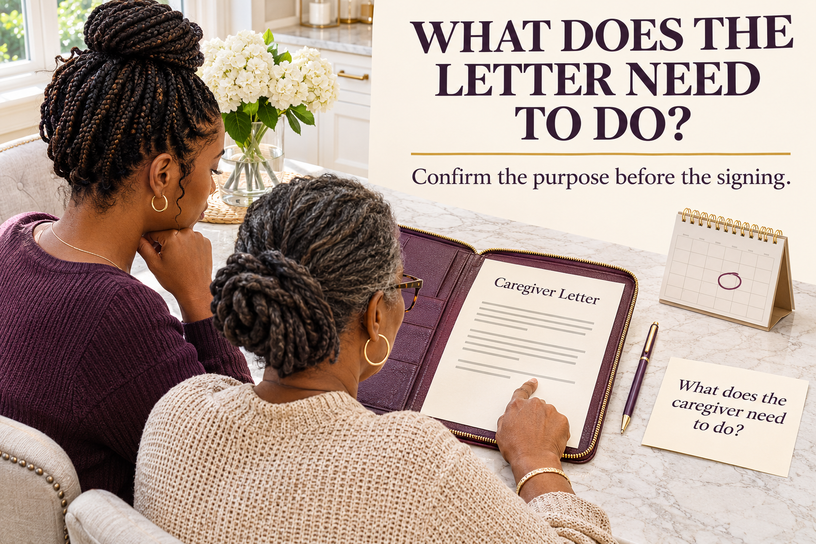
A letter is waiting beside the family calendar. A relative has agreed to care for your child, and someone suggests the next step: “Write it down and get it notarized.”
It sounds like the finishing touch. But before the pen moves, there is a question worth asking: does the letter give the caregiver permission for a particular task, or is the family trying to establish legal guardianship?
Elite Notary Signing provides mobile notarial services for eligible completed documents in Duluth, Gwinnett County, and Metro Atlanta. ENS can support a required notarial act after the document and instructions are identified. Notarizing a signature does not itself appoint a guardian.
Does a Notarized Letter Establish Guardianship?
Notarization alone does not make someone a child’s legal guardian in Georgia. Confirm the appropriate document or court process with qualified counsel, and confirm procedural requirements with the relevant court or receiving organization.
Begin With What the Caregiver Needs to Do
The person helping with school pickup may need different paperwork from someone seeking a guardianship appointment. Communicating with a provider, caring for a child during a parent’s absence, and planning for a child’s future raise different questions.
For example, a parent may write a letter for a relative to collect a child from school. If the school asks for its own permission form, a notarized letter may leave that request unanswered. This is an illustration of why the actual request matters, rather than a conclusion about the authority any particular document creates.
Ask the requesting organization: “What action needs to be documented, and which record do you require?” If the question concerns creating legal authority or selecting a legal form, take it to an attorney.
When the Question Is Guardianship
Gwinnett County Probate Court’s temporary guardianship guidance describes a petition process and an in-person oath before letters are issued. Its instructions also address existing custody or guardianship orders.
The court’s testamentary guardianship guidance concerns nomination through a will and the probate process. A nomination in a will is different from a current appointment to act.
These resources describe different procedures. Ask qualified counsel which legal arrangement applies to your circumstances, and confirm filing instructions with the court handling the matter. A mobile notarization does not replace a required court appearance.
Where Notarization Fits
Georgia notary guidance describes authorized acts such as taking acknowledgments, administering oaths, and witnessing signatures. The notary must also establish identity as required.
The notarial certificate documents the notarial act. It does not resolve custody, choose a caregiver’s authority, or establish that a letter accomplishes the family’s legal goal. A necessary signing step can matter without replacing the legal process around it.
Before You Arrange the Signing
Describe what the caregiver needs to do. Avoid deciding in advance that every request requires guardianship.
Ask the receiving organization for its written requirements and the record it needs.
Consult qualified counsel about legal arrangements, existing orders, and the appropriate document or process.
Ask the provider about signers, witnesses, notarial instructions, and any separate court-administered oath.
Give ENS the completed document name, requested service, location, timing, and confirmed witness instructions.
The letter records a request.
The seal does not decide the authority.
Keep a Conversation Note, Not an Appointment Form
A guardian-readiness conversation note can record the proposed care arrangement, requesting organization, and questions for counsel. It can also point to an existing document or court record that needs to be located.
The note does not appoint a guardian, grant authority, or transfer parental rights. Keep it free of legal appointment language and a notarization block. Its purpose is to help you ask a clearer question.
How ENS Supports the Confirmed Signing Step
When an eligible completed document requires notarization, ENS can discuss identification, signer participation, confirmed witness needs, location, and scheduling. Mobile appointments may be available at homes, workplaces, and other agreed locations within the service area.
If your paperwork came from a court or attorney, keep those instructions available. Confirm which signatures may be notarized outside court and which actions must occur before court staff. Share the document name first rather than sending a child’s private records simply to ask about availability.
A notarized signature and a guardianship appointment are different steps. Confirm what the caregiver needs to do and which document or legal process applies before requesting the notarial service.
Start with the purpose of the letter. Let that answer guide the next conversation.
Have a completed document that needs notarization?
Share the document name, provider’s instructions, signer count, location, and preferred timing so ENS can discuss the requested service.
Related Services and Official Resources
- Elite Notary Signing Resource Center
- General Mobile Notary Services
- What Assistants Should Confirm Before Scheduling for Someone Else
- GSCCCA Georgia Notary Law
- GSCCCA General Notary Information
- Gwinnett County Probate Court’s temporary guardianship guidance
- testamentary guardianship guidance
- Georgia Probate Court standard forms and instructions
Add comment
Comments